

The List Is Not the Tradition: Why Living Heritage Cannot Be Preserved Like a Monument
UNESCO can recognize a ritual, a craft or a musical tradition—but recognition is not the same as keeping it alive. The real work of safeguarding culture happens in apprenticeships, kitchens, workshops and communities, where traditions are allowed to change without losing their meaning.
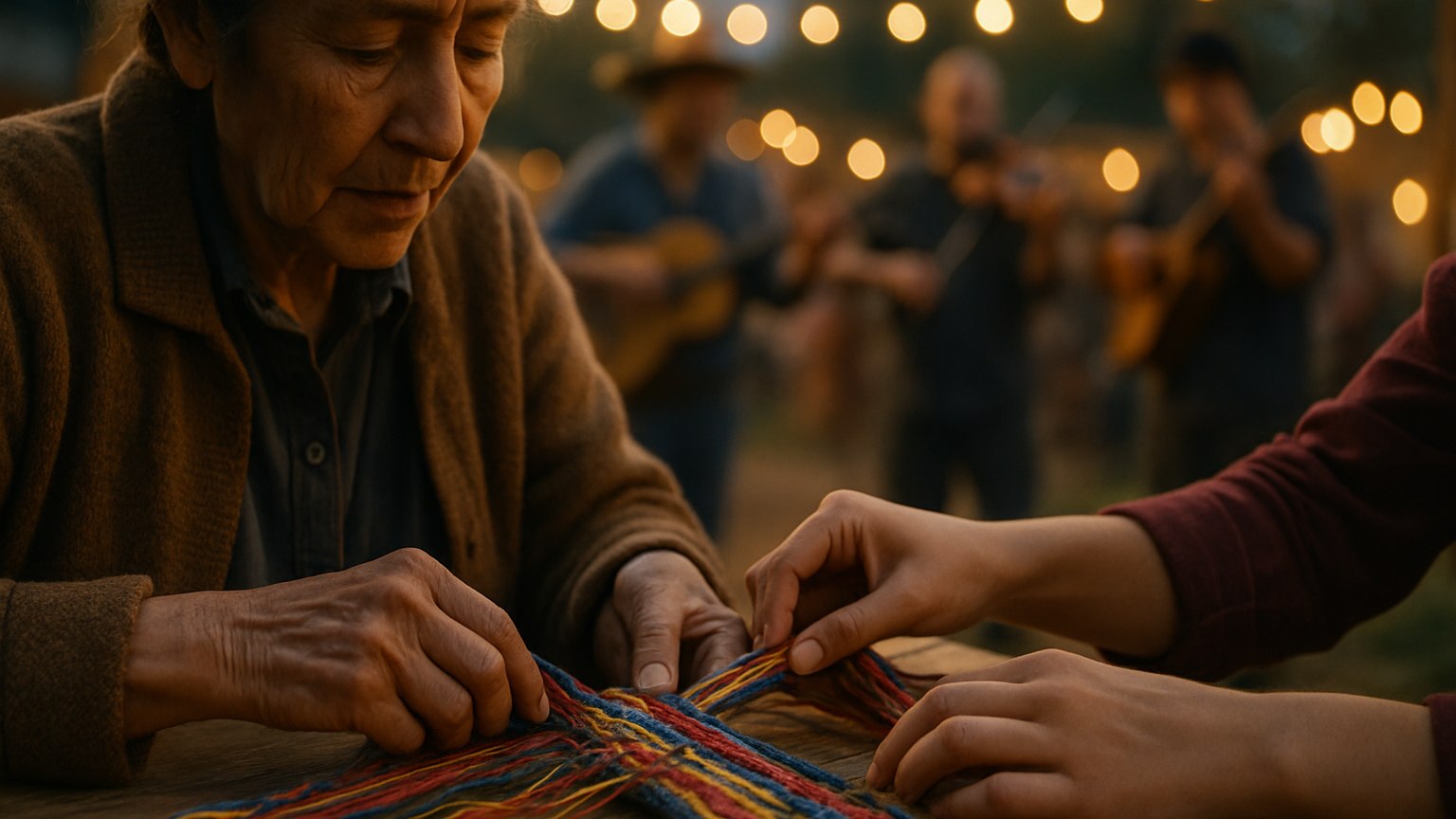
A stone temple can be fenced, repaired and guarded. A song cannot. Nor can a way of preparing food, a seasonal ritual, a language of gesture, a boat-building skill or a grandparent’s particular method for telling a local story. These forms of culture survive only when people continue to practise them—and, crucially, when younger people find reasons to make them their own. That simple distinction is at the heart of UNESCO’s 2003 Convention for the Safeguarding of the Intangible Cultural Heritage, one of the most consequential shifts in how the world officially thinks about heritage.
The convention was adopted on October 17, 2003. Its subject was not ruins, paintings or protected landscapes, but practices, knowledge and skills that communities recognize as part of their inheritance. UNESCO’s definition includes oral traditions, performing arts, social practices, rituals, knowledge concerning nature and traditional craftsmanship. Most importantly, it says this heritage is transmitted between generations and constantly recreated in response to a community’s environment and history. The convention’s text therefore offers a quietly radical premise: culture need not remain unchanged to remain continuous.
A different kind of inheritance
For much of the modern conservation movement, heritage was easiest to imagine as a valuable object: a building, an archaeological site, a collection, a manuscript. Such things can be catalogued and stabilized. “Intangible cultural heritage,” often shortened to ICH, asks a more difficult question: what exactly is being protected when the essential thing is a practice rather than a possession? UNESCO’s answer is not merely the visible performance or finished object, but the knowledge, meanings and social relationships through which it is made and shared. UNESCO’s explanation of living heritage stresses that its importance lies in the knowledge and skills passed among people, not simply in the outward manifestation seen by an audience.
That changes the mental picture. A handwoven textile may be beautiful in a museum, but the living heritage is also the cultivated material, the dye knowledge, the pattern vocabulary, the apprenticeship, the occasions when the textile is worn and the authority to decide what may change. A festival is not just its costumes and photographs; it is the organizing labor, local memories, sacred or civic meanings and shared expectations that bring people back next year. An archive can record evidence of these things. It cannot, by itself, reproduce the social world that gives them life.
This is why the language of “preservation” can mislead. It suggests sealing a tradition behind glass, as if change were automatically a form of damage. UNESCO instead uses the term safeguarding. In the convention, that includes identifying, documenting, researching, protecting, promoting, transmitting and revitalizing heritage. The goal is not a perfect historical reenactment; it is viability—the ability of a practice to be carried forward. UNESCO’s guidance on safeguarding puts the point plainly: safeguarding concerns the transfer of knowledge, skills and meaning, rather than freezing a form at a chosen moment in time.
The paradox: recognition can make a tradition less alive
International recognition can be valuable. It can bring prestige to practitioners whose work has been dismissed as ordinary, rural or old-fashioned. It can encourage public funding, prompt documentation before knowledge is lost and give communities a stronger language for arguing that their practices matter. Yet a designation, plaque or celebratory list also creates a risk: outsiders may begin to treat a living tradition as a finished cultural product, expected to look the same every time.
That pressure is not hypothetical. UNESCO itself distinguishes living heritage from older concepts such as “folklore,” partly because folklore can imply a static remnant of the past or a performance separated from its original setting for consumption. Its own discussion of definition and identification warns that living traditions may adapt to new circumstances, and that innovation remains part of heritage when it is initiated by those who carry the tradition. UNESCO’s guidance on defining ICH is unusually clear on this point: continuity does not require cultural immobilization.
Consider what happens when a local practice becomes a tourist attraction. A shorter, more legible version may be performed on a schedule convenient for visitors. A craft may be redesigned around souvenirs. A ritual once governed by community calendars or religious obligations may become a stage event. None of these changes is automatically corrupting; income and public visibility can help practitioners continue their work. But the central question shifts from “Is this authentic enough for us?” to “Does this look authentic enough for an audience?” That is a major transfer of power.
The Smithsonian Folkways educational materials on Filipino and Cambodian musical traditions in the United States offer a useful counterpoint. They describe tradition as rooted in shared history but continually altered by new experiences, social circumstances and encounters. They also ask who has the power to reinterpret heritage. Its discussion of preservation and adaptation points to a more honest model than the fantasy of unchanged survival: traditions can travel, mix and acquire new meanings while communities remain active authors of what endures.
From display to transmission
The most revealing measure of a cultural practice is not whether it can be photographed attractively. It is whether someone can still learn it. Is there time for apprenticeship? Are elders or skilled practitioners respected and paid? Can people afford the materials, space and travel that participation requires? Is the language in which a practice makes sense still being used? Do young people have permission to alter the form without being told they have betrayed it?
Those questions move heritage from the realm of ceremonial celebration into everyday policy. A community may need rehearsal space more than a commemorative statue; childcare during workshops more than a glossy brochure; legal protection from extractive commercial use more than an international award. In that sense, safeguarding is inseparable from livelihoods, education, land, migration and cultural rights. The Italian legal scholar Federico Lenzerini argues that the 2003 convention’s emphasis on communities and practitioners has to be understood alongside human-rights protections, because living heritage depends on the real ability of its bearers to maintain and develop it. His analysis in the European Journal of International Law identifies community participation as essential rather than decorative.
The issue becomes especially sharp when traditional cultural expression becomes commercially fashionable. WIPO notes that Indigenous cultural expressions can include textiles, attire, ornaments, symbols and designs deeply tied to identity, history and belief. It also warns that use without consent can cause harm, even when the borrowing is unintentional. WIPO’s guidance on Indigenous Peoples and fashion does not imply that cultures must be sealed off from exchange. It does insist that inspiration is not a free pass to ignore consent, attribution, relationship or benefit-sharing.
What respectful attention looks like
For visitors, consumers and cultural institutions, the implication is less glamorous than collecting “must-see” experiences—but more useful. Treat a tradition as something people do for reasons of their own, not as content waiting to be extracted. Ask whether makers and performers are leading the interpretation. Pay them fairly. Learn the context before sharing images. Accept that some practices are not designed for public access, and that a changed version may be neither less real nor available for anyone else to judge.
For museums and governments, the harder task is to make room for disagreement. Communities are rarely unanimous about what should be retained, who represents a tradition or how a practice should adapt. That messiness is not an administrative failure. It is evidence that a culture is still inhabited. A monument may benefit from consensus about restoration. Living heritage often needs the opposite: enough support, autonomy and material security for argument, experiment and transmission to continue.
The deepest lesson of intangible heritage is that culture does not live in a list, however useful a list may be. It lives in repetition with variation: hands teaching hands, voices answering other voices, recipes adjusted for new kitchens, old forms meeting new needs. The ambition should not be to make the past permanently visible. It should be to ensure that people retain the power to make a meaningful future from what they have inherited.
Sources and references
- Text of the Convention for the Safeguarding of the Intangible Cultural Heritage
- Frequently asked questions
- Safeguarding without freezing
- Define and identify intangible cultural heritage
- Cultural Preservation and Adaptation: Kulintang, Kundiman, and Pinpeat in the US
- Intangible Cultural Heritage: The Living Culture of Peoples
- Indigenous Peoples and Fashion
More to read
Acupressure, Meridians and the Art of Useful Touch: 10 Traditional Points to Know
Acupressure is a needle-free practice rooted in Chinese medicine’s channel theory. Here is its long history, …

The Lens That Becomes a Life: How Mental Paradigms Shape What We Notice, Choose and Call “Manifestation”
Our deepest assumptions do not necessarily command the universe, but they can strongly influence perception, …

Your Watch Says You’re Stressed. What, Exactly, Does It Know?
A “high stress” alert can reflect poor sleep, a hard workout, alcohol, illness, a warm bedroom—or psychologic…
Apps to use

Complete Numerology Report
Turn your name and birthdate into a complete numerology report covering your core numbers, challenges, grids,…
Chinese Zodiac
Discover your Chinese zodiac animal and element from your birth date, and explore its traditional traits, str…

Frequency Matrix
Create your own soundscapes with custom frequencies, layered audio and a built-in timeline DAW. Generate, arr…